Walk into a hobby store and you might find a 3D printer for $99. Walk into a dental office or a small machine shop and you’ll find one that cost $5,000, sometimes ten times that. Both are labeled “3D printer.” Both build objects layer by layer. And yet what they actually do, what they print with, and what it costs to keep them running could not be more different. This guide breaks down what you actually get at each price tier in 2026, what the consumables really cost, and which machine makes sense for which kind of buyer.
The Sub-$200 Tier: Toy-Grade FDM
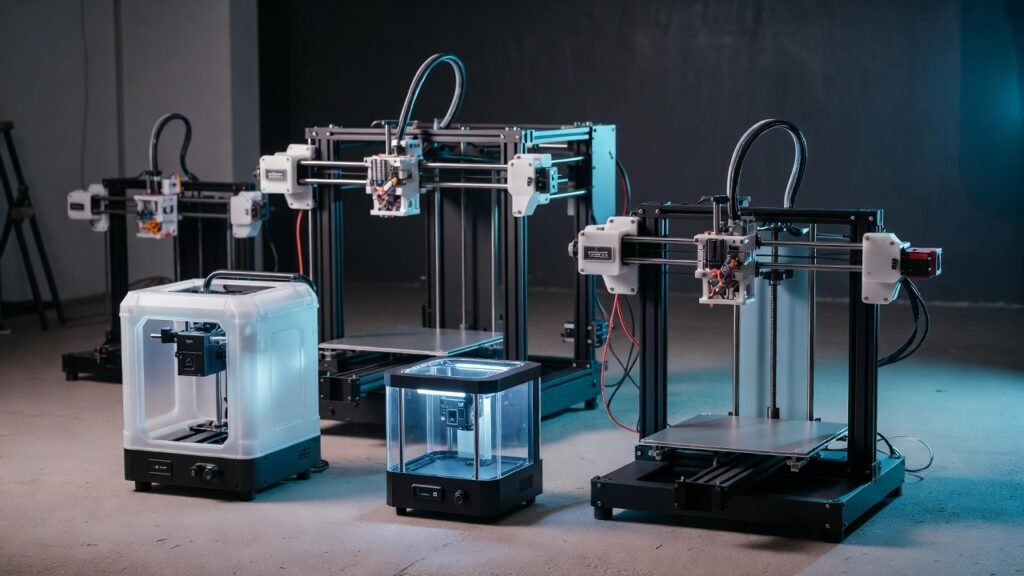
At the very bottom of the market sit small fused deposition modeling (FDM) printers aimed at kids, classrooms, and curious first-time buyers. These machines typically have a build volume around 100 by 100 by 100 millimeters, a single extruder, and a heated bed that may or may not actually reach a useful temperature. They print in PLA, the friendliest plastic in the hobby, which costs about $18 to $25 per kilogram spool. A spool will get you somewhere between 100 and 300 small prints depending on size and infill, so the per-print material cost is often under fifty cents.
The catch is reliability. Beds warp, belts loosen, and the included slicer profiles are usually rough. You’re buying an introduction to the hobby, not a tool you can depend on. If a print fails halfway through, you’ve wasted maybe thirty cents of plastic, which is exactly why this tier is forgiving for learners.
The $200–$600 Sweet Spot: Prosumer FDM
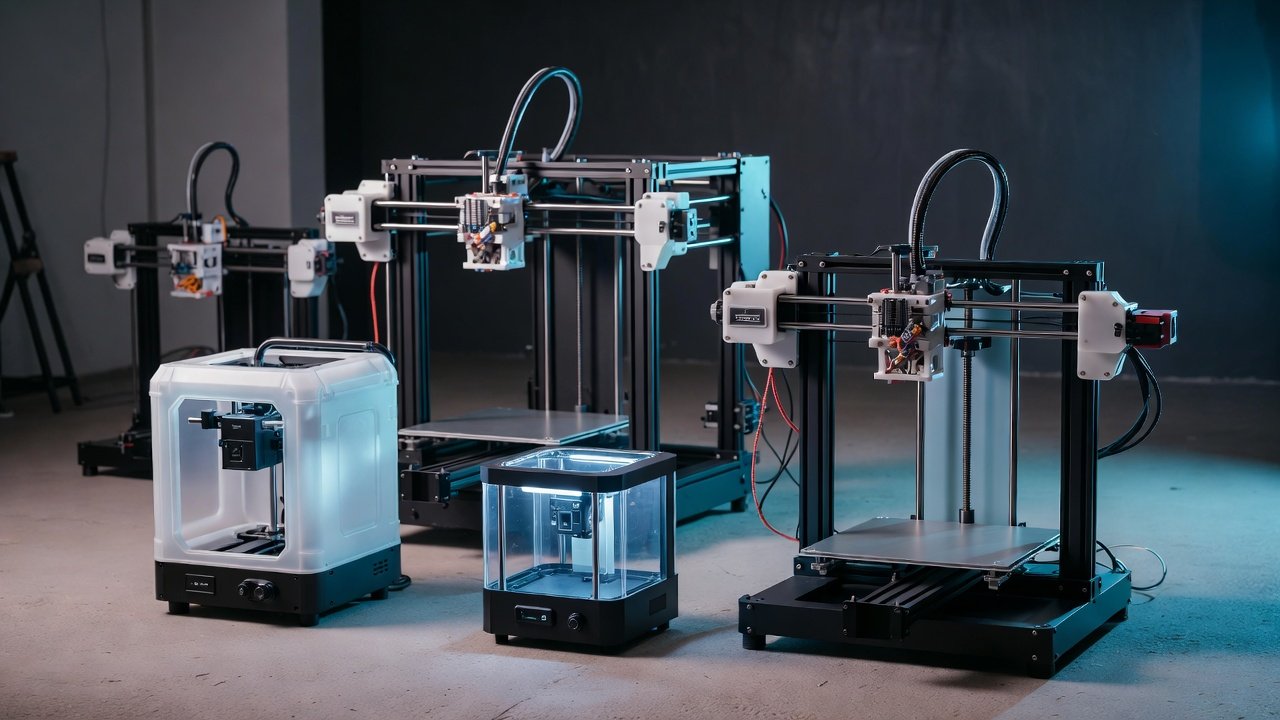
This is where most serious hobbyists land, and honestly where most people should start if they want to actually make things. Machines in this range offer build volumes around 220 by 220 by 250 millimeters, auto-bed leveling, direct-drive extruders, and print speeds that have genuinely transformed in the last two years thanks to input shaping and pressure advance. A part that took eight hours in 2022 prints in under two hours on a current-generation machine.
Filament options expand dramatically here. Beyond PLA you can run PETG (about $22 per kilogram, tougher and more heat-resistant), TPU (around $30 per kilogram, flexible), and ABS or ASA (around $25 per kilogram, durable but smelly). Annual filament spend for an active hobbyist usually lands between $150 and $400. Replacement nozzles are a few dollars, build plates run $25 to $50 every year or two, and the occasional belt or fan is cheap. Total cost of ownership is genuinely low.
The $600–$1,500 Tier: Resin Enters the Picture
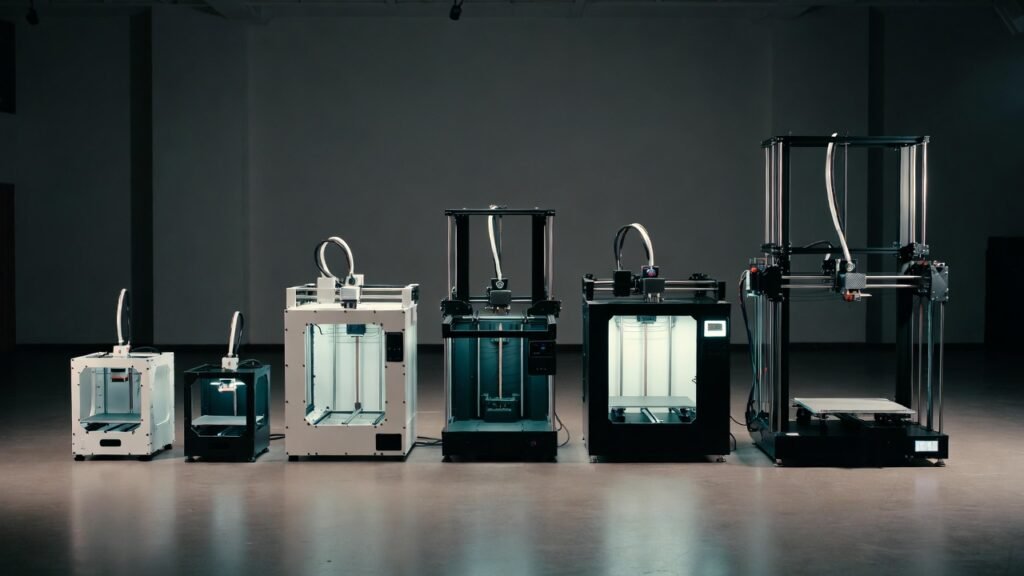
Once you cross $600 you start seeing two very different machines competing for your dollar: high-end FDM printers with enclosed chambers, multi-material units, and CoreXY motion systems, and mid-range MSLA resin printers with 8K or 12K monochrome screens. They are not interchangeable. FDM is for functional parts, brackets, enclosures, and large objects. Resin is for miniatures, dental models, jewelry masters, and anything where surface detail matters more than mechanical strength.
Resin is where running costs jump. A liter of standard photopolymer resin runs $30 to $60, tough or engineering resins push $80 to $120, and you also need isopropyl alcohol for washing (roughly $20 a gallon) plus nitrile gloves, FEP film replacements every few hundred hours ($15 to $25 each), and ideally a wash-and-cure station that adds $150 to $300 to your initial outlay. Resin printers also demand ventilation and careful waste handling, which is a real cost in space and attention even if it doesn’t show up on a receipt.
The $1,500–$5,000 Tier: Professional and Industrial-Adjacent
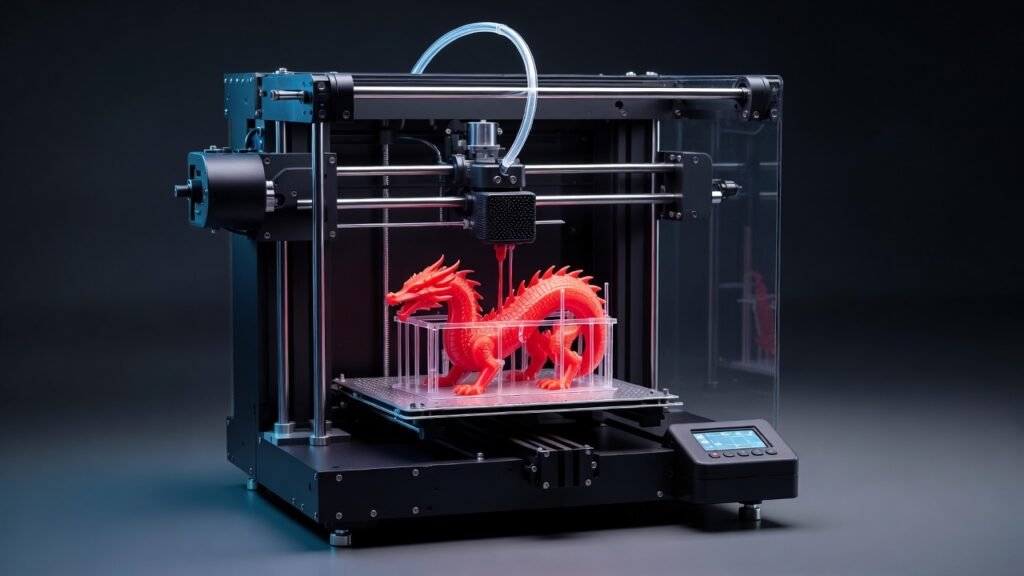
Above $1,500 you stop paying for capability and start paying for repeatability. A small business that prints customer parts every day cannot afford to babysit failures, so machines in this tier ship with hardened steel hotends, filament runout sensors, power-loss recovery, enclosed and filtered chambers for engineering plastics like polycarbonate and nylon, and firmware that has been beaten on by tens of thousands of users. Build volumes grow to 350 millimeters or more on a side, and some printers in this band handle carbon-fiber-filled materials that would shred a hobby nozzle in a week.
Material costs scale with capability. Polycarbonate runs $50 to $90 per kilogram, nylon blends $60 to $120, and carbon-fiber-reinforced filaments $80 to $200. The hardware to print them, including hardened nozzles and abrasion-resistant extruder gears, adds another $50 to $200 a year in wear parts. At this tier the printer is a tool that pays for itself, not a hobby that costs money.
So Which One Should You Actually Buy?
For almost everyone reading this, the honest answer is a $300 to $500 prosumer FDM printer. It will print 95 percent of what people imagine when they hear the words “3D printer,” the consumables are cheap enough that experimenting is free in any meaningful sense, and the learning curve has flattened considerably compared to even three years ago. Buy resin only if you specifically want to print miniatures or highly detailed small models and you accept the mess. Buy a $1,500-plus machine only if you have a clear use case that justifies it, because the jump from hobby to professional is paid for in dollars and in the discipline required to keep an industrial-grade tool calibrated.
The phrase “3D printer” hides an enormous range of machines, materials, and intentions. Knowing where on that range you actually need to be is most of the battle, and almost always saves you money.